Meet customers
Real Korean customers walk in every day. See who they are, what they ask and what holds their attention.
A pop-up puts your brand in front of real Korean customers before you make a bigger commitment. In one space you meet the market, make sales, build demand and leave with a foundation to grow on.
Real Korean customers walk in every day. See who they are, what they ask and what holds their attention.
Sales tell the truth. Learn which products, prices and messages Korean customers pay for.
The launch feeds search, content, word of mouth and retailer interest that keep working after it closes.
Use the sales and signals as your foundation. Repeat, expand or enter new channels with proof in hand.
A successful pop-up needs more than a venue. Strategy, place, people, demand, results and the next step run as one connected launch.
Define what the launch must prove and how success will be judged.
Find the right area and venue, then handle the physical delivery.
Recruit, train and manage the team your customers meet.
Bring the right Korean audience through search, media, creators and content.
Track visits, sales, product response and customer feedback while it happens.
Turn the results into a clear decision for Korea.
One connected launch plan, from the Korean website and advertising to the space, opening and results.
Turn your goals, audience, budget and timing into one practical Korea launch brief.
Find the right Seoul space and coordinate costs, access, landlords and handback.
Design the customer experience, then coordinate drawings, fabrication, installation and removal.
Recruit and train the local team, then manage stock, payments, queues and every open day.
Build the Korean website and reach customers through Naver, Meta, creators, media and local content.
Track visits, sales, product response and campaign results, then decide what to do next.
Seongsu puts your brand inside Seoul’s most active discovery district. The audience is already here, but the right street, space and budget depend on what you want the launch to achieve.
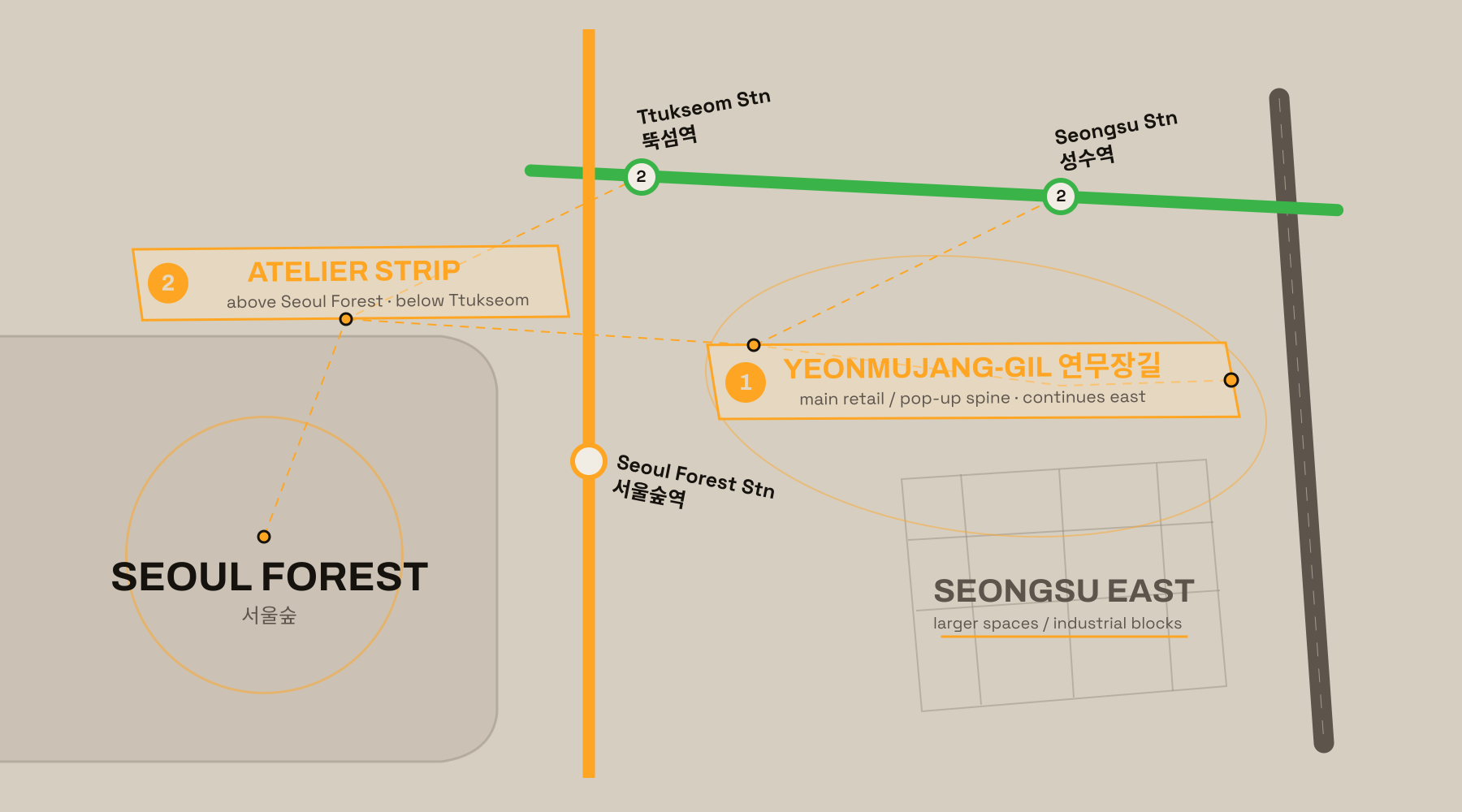
Customers, creators, editors and buyers already move between new brands, spaces and ideas across the district.
Public venue examples vary by street, room and access. Rent is only one part of the launch, alongside build, staff and marketing.
Our team has helped some of Korea’s best-known beauty, retail, technology and wellness brands increase sales through ecommerce, paid media and global marketplaces. We use that experience to help international brands launch and grow in Korea.













Amazon Beauty. Again.Overall Beauty best seller / reached repeatedly
Google, Meta + email as one.Performance-driven sales / year on year / Global Amore Mall
Every platform grew.Sales year on year / Amazon + Meta + content
Practical answers on costs, locations, timing, operations and selling, written for teams planning Korea from abroad.
Clear answers before you commit to a space, budget or launch plan.
Yes. We run the Seoul side: venue, production, staffing, creators, media and operations.
Yes. Choose space only, a turnkey pop-up or the full Korea launch.
Venue, duration, build, staffing, creators and media.
It depends on the venue, production, category and audience plan.
Not always. Selling, payments, marketplaces and regulated categories decide that.
We review the results and recommend what to do next.
Choose your goal, budget and timing to see a rough starting plan.
Rough estimate only. Final costs and results depend on the venue, format, category and marketing plan.
Start with a strong space, a clearly defined local audience and simple measurement before adding more channels.
Tell us about the brand, where you are based and what you need help with. A rough outline is enough.
Choose one — you can change it in the message
We plan and run Korea launches, from the first goals and venue search to the build, local team, marketing, open days and next steps. Use one service or combine the parts you need.
GET IN TOUCHTurn your goals, audience, budget and timing into one practical Korea launch brief.
Find the right Seoul space and coordinate costs, access, landlords and handback.
Design the customer experience, then coordinate drawings, fabrication, installation and removal.
Recruit and train the local team, then manage stock, payments, queues and every open day.
Build the Korean website and reach customers through Naver, Meta, creators, media and local content.
Track visits, sales, product response and campaign results, then decide what to do next.
Practical guides for planning a Korea launch, from cost and location to opening, running it from abroad and selling in Korea.
Budget the venue, build, team, audience, measurement and contingency.
Compare Seoul districts, then choose the right part of Seongsu.
Plan the sequence, timing and split between headquarters and Seoul.
The sequence from the business goal and local offer through venue, customer reach, opening and what comes next.
What headquarters and Seoul need to decide, sign, produce, promote and test each week.
Split approvals from local delivery and define ownership for suppliers, team, stock and live issues.
Understand contracts, imports, staffing, payments and product rules.